Thursday, June 27, 2013

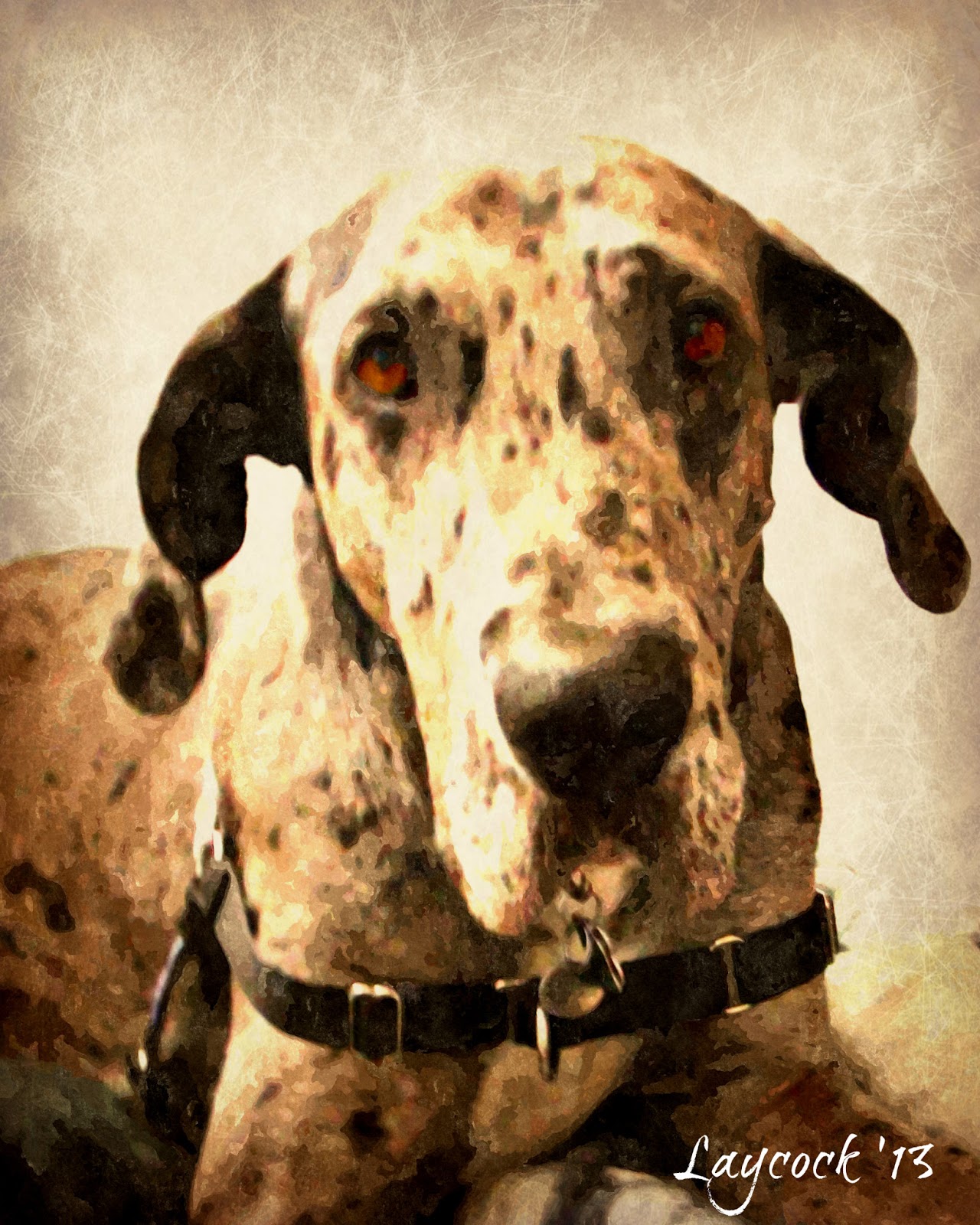
Fur Real Pet Portraits - Digitally Painted

art by Jodi Laycock of Fur Real Pet Portraits on FB
 For more work from the artist Jodi Laycock of Fur Real Pet Portraits on FB please visit the link below from the site 500px.com and it will take you there...

http://500px.com/goliath

If you would like to order a portrait of your pet please contact Jodi at Fur Real Pet Portraits

Tuesday, June 25, 2013

Can My Dog be Gay???


Art by Jodi Laycock of Fur Real Pet portraits - copyrighted


Apparently biologists claim that 'gay' animal behavior has been spotted in 1,500 different animal species. Given that common arguments used by homophobes in the past have been that "it's not natural", and "animals are never gay", it's understandable that there are now many who may wish to use the reverse argument: if it happens in animals, homosexuality must be as natural as heterosexual behavior.

What about pets? Can pets be homosexual? Do you know, I don't think pets regard this subject with the same anxiety as many humans. Pets tend to be either asexual (as in spayed and castrated pets, and females when they're not in season) or sexual (as in females when they're in season, and entire males for most of the time).

When they’re asexual, pets often enjoy male and female company equally, having close social relationships with the same sex and with the opposite sex .

When pets are in a sexual phase, under the influence of reproductive hormones (testosterone in males or oestrogen in females in season), they are often utterly focussed on the act of copulation rather than worrying about the gender of the object of their attention. Think of a Jack Russell Terrier hanging onto your lower leg for dear life, or a female Collie in season doing escape artist tricks to get away from the confinement of the human home to have fun with her friends.  One scientific study, reported in the Telegraph , described ‘the first recorded case of homosexual necrophilia in the Mallard duck’.  The main message is that when the reproductive hormones are coursing through animals' veins, the gender (or indeed, species) of the object of their affections may not be high on the list of considerations.

One of my concerns about the increasing 'humanisation' of  pets is that there may be a trend towards considering our pets’ sex lives as something that we should be worried about. I've already had one client who was incensed when I explained how neutering and spaying involved removal of his male and female dogs' gonads. He was adamant that his pets should have the right to enjoy a sex life. Why couldn't I just tie their tubes, like humans? Indeed, there are a few vets out there who believe that neutering and spaying are a form of sexual mutilation that humans impose unfairly on animals.  Could ‘entitlement to a sex life’ become 'the sixth freedom', as part of a long term battle for animal rights?

I'm going to stick to my old fashioned guns on this one. Neutered and spayed pets don't know what they're missing, and if anything, they're happier without those pesky trouble-making hormones. Population control and a calm social environment are far more important than human-imposed ideas of what pets should or should not do ‘in the bedroom’.

We’re allowed to euthanase pets because we know that it can be the best way to prevent suffering, and they don't know that it's about to happen to them. We are allowed to control pets’ sexuality for similar reasons, and that's the way it ought to be, for their own sake.

‘Homosexual or heterosexual?’ is the wrong question to ask about pets. Instead, we should ask whether they are ‘sexual or asexual’, and for their own sake, the more that we move into the asexual category, the better.


Monday, June 24, 2013

Friend therapy

art by jodi Laycock of  Fur Real Pet Portraits on FB or contact vraiment@sasktel.net

Canadian Hero Dogs - 2013 we applaud you

Titan (blue RIP) and Charlie (rescue)

In May of 2013 the Purina Animal Hall of Fame recognized four Canadian dogs' extreme acts of bravery, courage and devotion at its annual ceremony at Toronto's PawsWay.

Bella, Vicious, Snickers and Teak were all honoured for "the extraordinary actions they took to protect a human life — demonstrating the unique and powerful bond that exists between animals and people," a press release stated.

"The tenacity of our 2013 inductees to rescue and protect people from harm — whether it's a wild animal, house fire, criminal or a medical emergency — showcases the connection animals have to humans and the physical risks they will take to keep them safe," Purina PetCare Legacy executive director Mary Siemiesz said in a statement. "This year's inductees remind us of how much animals enrich our lives, and that pets and humans are better together."

Bella, a 2-year-old Bernese Mountain dog from Milton, Nova Scotia, was recognized for her quick-thinking heroism. She pulled her injured owner, Chris Laroque, from their burning home.
"Without Bella's devotion, strength and courage, I would have died in the fire that destroyed my home," Laroque said. "She is truly our family hero, and we're so happy that Bella is being recognized for her life-saving efforts by the Purina Animal Hall of Fame."

Another honoree, Vicious, a 12-year-old border collie/Labrador cross from Trail, British Columbia, was praised for lunging at a cougar attacking owner Angie Prime in her home. Conservation officers agreed that without Vicious there to attack and then chase away the wild cat, Prime would not have survived the ordeal.

Snickers, a 4-year-old border collie/pointer cross from Oshawa, Ontario, barked aggressively in his neighbours' driveway, blocking them from leaving for work. They called the police, who noticed that Snicker's owner, Gregory Gould, who suffers from Chronic Obstructive Pulmonary Disease, was lying unconscious on his living-room floor. Snickers had repeatedly thrown himself against the screen door so he could get outside and bark for help.

The "Service Dog of the Year" award went to Teak, an 8-year-old German Shepherd from Vancouver, British Columbia. Teak and his partner, Constable Derrick Gibson, responded to an armed robbery in progress this January. Teak caught and tackled the suspect, but was stabbed multiple times in the process. After two surgeries, Teak has healed from his wounds. He has since retired from duty.
Since its inception in 1968, the Purina Animal Hall of Fame has inducted 159 animals: 132 dogs, 26 cats and one horse.

Training collars For Dogs


Training a dog can be a difficult undertaking, which is why there are various training aids available. One such aid is a training collar, which is used to emphasize certain types of training and to make your job a little bit easier. Training collars should not be inhumane -- in fact, most of them aren't -- and the way you use your training collar will directly impact the speed and effectiveness of your training program. There are literally dozens of different types of training collars on the market, but here are a few of the most common.

Prong Collars

The very mention of a prong collar is enough to send some people running for the hills, but I've effectively used it on two of my giant breed dogs and if used correctly, they can work wonders. A prong collar is a training collar that consists of metal links through which metal prongs are spaced about an inch apart. When you correct your dog with the leash, the prongs lightly pinch the dogs neck, symbolizing the corrective action the mother dog gives her pups by picking them up by the scruff of the neck.

A prong collar can be inhumane when used in correctly as a training collar. For example, if your dog is the type to pull against the leash consistently, he or she will not benefit from the prong collar because it will lose its effectiveness. Dogs can easily become "immune" to the pinch of the prong collar after frequent use, and it should only be used as a corrective aid.
As training collars go, the prong collar is comparatively easy to use. Simply fasten the collar around your dog's neck, leaving approximately 1/2 inch of space between the prongs and your dog's skin.

Halti Collars

If you have a dog that is aggressive or is prone to lunging or snapping at other dogs or humans, the Halti collar might be the best training collar for you. This type of collar fits over the dog's head, keeps the mouth shut and helps to restrain the dog. It allows you to control the motion of the head, thereby exacting more control over the body. Some people consider this training collar difficult to use because most dogs will resist it at first. However, as a matter of safety, this training collar is one of the most effective.

When using the Halti Collar, make sure that the device is secured properly. You should never jerk on or pull up on a Halti collar because you run the risk of damaging your dog's neck or back. If you don't think that you can control your dog without jerking on the Halti collar, you might want to put your dog in training with a professional.

Choke Collars

Like the prong collar, the choke collar is surrounded by a wealth of controversy. Most dog owners recognize this training collar as effective and humane, while others fear the potential damage that can be caused by an overzealous dog or owner. It's true that the choke collar can cause permanent damage, or even death, to a dog if used incorrectly. However, this training collar is recommended by most dog trainers.

The choke collar works by tightening around the dog's neck either when the owner pulls the leash or the dog pulls on the collar. As soon as the tension is relieved, the collar ceases its "choking" action.
Training collars are not for use by the inexperienced and you should always learn how to use it before attempting to put it on your dog.


*with help from Steve Thompson and Jodi Laycock

Saturday, May 11, 2013

99 Fun Facts About Dogs

  1. All dogs can be traced back 40 million years ago to a weasel-like animal called the Miacis which dwelled in trees and dens. The Miacis later evolved into the Tomarctus, a direct forbear of the genus Canis, which includes the wolf and jackal as well as the dog.g
  2. Ancient Egyptians revered their dogs. When a pet dog would die, the owners shaved off their eyebrows, smeared mud in their hair, and mourned aloud for days.b
  3. Small quantities of grapes and raisins can cause renal failure in dogs. Chocolate, macadamia nuts, cooked onions, or anything with caffeine can also be harmful.c
  4. Apple and pear seeds contain arsenic, which may be deadly to dogs.c
  5. Rock star Ozzy Osborne saved his wife Sharon’s Pomeranian from a coyote by tackling and wresting the coyote until it released the dog.d

  6. dog paws

    Dogs have sweat glands in between their their paws

  7. Dogs have sweat glands in between their paws.e
  8. In 2003, Dr. Roger Mugford invented the “wagometer,” a device that claims to interpret a dog’s exact mood by measuring the wag of its tail.d
  9. Dogs have three eyelids. The third lid, called a nictitating membrane or “haw,” keeps the eye lubricated and protected.i
  10. A dog’s shoulder blades are unattached to the rest of the skeleton to allow greater flexibility for running.e
  11. Puppies are sometimes rejected by their mother if they are born by cesarean and cleaned up before being given back to her.c
  12. The phrase “raining cats and dogs” originated in seventeenth-century England. During heavy rainstorms, many homeless animals would drown and float down the streets, giving the appearance that it had actually rained cats and dogs.d
  13. During the Middle Ages, Great Danes and Mastiffs were sometimes suited with armor and spiked collars to enter a battle or to defend supply caravans.h
  14. Pekingese and Japanese Chins were so important in the ancient Far East that they had their own servants and were carried around trade routes as gifts for kings and emperors. Pekingese were even worshipped in the temples of China for centuries.b

  15. dog faces

    The shape of a dog’s face can help predict how long a dog will live

  16. The shape of a dog’s face suggests how long it will live. Dogs with sharp, pointed faces that look more like wolves typically live longer. Dogs with very flat faces, such as bulldogs, often have shorter lives.d
  17. After the fall of Rome, human survival often became more important than breeding and training dogs. Legends of werewolves emerged during this time as abandoned dogs traveling in packs commonly roamed streets and terrified villagers.d
  18. During the Middle Ages, mixed breeds of peasants’ dogs were required to wear blocks around their necks to keep them from breeding with noble hunting dogs. Purebred dogs were very expensive and hunting became the province of the rich.d
  19. The most dogs ever owned by one person were 5,000 Mastiffs owned by Kubla Khan.d
  20. The American Kennel Club, the most influential dog club in the United States, was founded in 1884.e
  21. The most popular male dog names are Max and Jake. The most popular female dog names are Maggie and Molly.d

  22. toto

    Some scholars speculate that Dorothy’s dog, Toto, may represent the Egyptian god of death, Anubis

  23. Scholars have argued over the metaphysical interpretation of Dorothy’s pooch, Toto, in the Wizard of Oz. One theory postulates that Toto represents Anubis, the dog-headed Egyptian god of death, because Toto consistently keeps Dorothy from safely returning home.d
  24. Weird dog laws include allowing police offers in Palding, Ohio, to bite a dog to quiet it. In Ventura County, California, cats and dogs are not allowed to have sex without a permit.d
  25. The first dog chapel was established in 2001. It was built in St. Johnsbury, Vermont, by Stephan Huneck, a children’s book author whose five dogs helped him recuperate from a serious illness.c
  26. Those born under the sign of the dog in Chinese astrology are considered to be loyal and discreet, though slightly temperamental.h
  27. In Iran, it is against the law to own a dog as a pet. However, if an owner can prove the dog is a guard or hunting dog, this restriction doesn’t apply. Muslim reticence concerning dogs is perhaps due to the fact that rabies has always been endemic in the Middle East.d
  28. The Mayans and Aztecs symbolized every tenth day with the dog, and those born under this sign were believed to have outstanding leadership skills.d
  29. The ancient Mbaya Indians of the Gran Chaco in South America believed that humans originally lived underground until dogs dug them up.b

  30. Plato

    Plato once said that ”a dog has the soul of a philosopher”

  31. Plato once said that “a dog has the soul of a philosopher.”d
  32. French poodles did not originate in France but in Germany (“poodle” comes from the German pudel or pudelhund, meaning “splashing dog”). Some scholars speculate the poodle’s puffs of hair evolved when hunters shaved the poodle for more efficient swimming, while leaving the pom-poms around the major joints to keep them warm.b
  33. The name of the dog on the Cracker Jacks box is Bingo. The Taco Bell Chihuahua is a rescued dog named Gidget.d
  34. The first dogs were self-domesticated wolves which, at least 12,000 years ago, became attracted to the first sites of permanent human habitation.f
  35. Dachshunds were bred to fight badgers in their dens.d
  36. Laika, a Russian stray, was the first living mammal to orbit the Earth, in the Soviet Sputnik spacecraft in 1957. Though she died in space, her daughter Pushnika had four puppies with President John F. Kennedy’s terrier, Charlie.d
  37. Dalmatians are completely white at birth.d
  38. The term “dog days of summer” was coined by the ancient Greeks and Romans to describe the hottest days of summer that coincided with the rising of the Dog Star, Sirius.b
  39. Alexander the Great is said to have founded and named a city Peritas, in memory of his dog.b
  40. In ancient Greece, kennels of dogs were kept at the sanctuary of Asclepius at Epidaurus. Dogs were frequently sacrificed there because they were plentiful, inexpensive, and easy to control. During the July 25 celebration of the kunophontis (“the massacre of dogs”), dog sacrifices were performed to appease the ancestors of Apollo’s son, Linos, who was devoured by dogs..g
  41. Dog trainers in ancient China were held in high esteem. A great deal of dog domestication also took place in China, especially dwarfing and miniaturization.d
  42. The ancient religion Zoroastrianism includes in its religious text titled the Zend Avesta a section devoted to the care and breeding of dogs.b
  43. The earliest European images of dogs are found in cave paintings dating back 12,000 years ago in Spain.g
  44. The dog was frequently depicted in Greek art, including Cerberus, the three-headed hound guarding the entrance to the underworld, and the hunting dogs which accompanied the virgin goddess of the chase, Diana.b
  45. During the Renaissance, detailed portraits of the dog as a symbol of fidelity and loyalty appeared in mythological, allegorical, and religious art throughout Europe, including works by Leonardo da Vinci, Diego Velázquez, Jan van Eyck, and Albrecht Durer.b
  46. A puppy is born blind, deaf, and toothless.c

  47. basenji

    The Basenji is the world’s only barkless dog

  48. The Basenji is the world’s only barkless dog.e
  49. A dog most likely interprets a smiling person as baring their teeth, which is an act of aggression.f
  50. The origin of amputating a dog’s tail may go back to the Roman writer Lucius Columella’s (A.D. 4-70) assertion that tail docking prevented rabies.d
  51. One of Shakespeare’s most mischievous characters is Crab, the dog belonging to Launce in the Two Gentlemen of Verona. The word “watchdog” is first found in The Tempest.d
  52. President Franklin Roosevelt created a minor international incident when he claimed he sent a destroyer to the Aleutian Islands just to pick up his Scottish Terrier, Fala, who had been left behind.d
  53. Within hours of the September 11, 2001, attack on the World Trade Center, specially trained dogs were on the scene, including German Shepherds, Labs, and even a few little Dachshunds.d
  54. It costs approximately $10,000 to train a federally certified search and rescue dog.d
  55. The smallest dog on record was a matchbox-size Yorkshire Terrier. It was 2.5" tall at the shoulder, 3.5" from nose tip to tail, and weighed only 4 ounces.d
  56. Hollywood’s first and arguably best canine superstar was Rin Tin Tin, a five-day-old German Shepherd found wounded in battle in WWI France and adopted by an American soldier, Lee Duncan. He would sign his own contracts with his paw print.d
  57. At the end of WWI, the German government trained the first guide dogs for war-blinded soldiers.d
  58. A dog can locate the source of a sound in 1/600 of a second and can hear sounds four times farther away than a human can.c
  59. Touch is the first sense the dog develops. The entire body, including the paws, is covered with touch-sensitive nerve endings.e
  60. Eighteen muscles or more can move a dog’s ear.e
  61. The names of 77 ancient Egyptian dogs have been recorded. The names refer to color and character, such as Blackie, Ebony, Good Herdsman, Reliable, and Brave One.d
  62. In Egypt, a person bitten by a rabid dog was encouraged to eat the roasted liver of a dog infected with rabies to avoid contracting the disease. The tooth of a dog infected with rabies would also be put in a band tied to the arm of the person bitten. The menstrual blood of a female dog was used for hair removal, while dog genitals were used for preventing the whitening of hair.h
  63. In early Christian tradition, Saint Christopher, the patron saint of travelers, is sometimes depicted with a dog’s head.g
  64. The oldest known dog bones were found in Asia and date as far back as 10,000 B.C. The first identifiable dog breed appeared about 9000 B.C. and was probably a type of Greyhound dog used for hunting.g
  65. There are an estimated 400 million dogs in the world.d
  66. The U.S. has the highest dog population in the world. France has the second highest.d

  67. dog nose

    Dog nose prints are as unique as human fingerprints

  68. Dog nose prints are as unique as human finger prints and can be used to identify them.c
  69. Bloodhound dogs have a keen sense of smell and have been used since the Middle Ages to track criminals.e
  70. It is much easier for dogs to learn spoken commands if they are given in conjunction with hand signals or gestures.a
  71. Dogs in a pack are more likely to chase and hunt than a single dog on its own. Two dogs are enough to form a pack.a
  72. Dogs can see in color, though they most likely see colors similar to a color-blind human. They can see better when the light is low.c

  73. Petting dog

    Studies show that petting a dog lowers blood pressure

  74. Petting dogs is proven to lower blood pressure of dog owners.a
  75. Dogs have lived with humans for over 14,000 years. Cats have lived with people for only 7,000 years.h
  76. Zorba, an English mastiff, is the biggest dog ever recorded. He weighed 343 pounds and measured 8' 3" from his nose to his tail.d
  77. The average dog can run about 19 mph. Greyhounds are the fastest dogs on Earth and can run at speeds of 45 mph.c
  78. One female dog and her female children could produce 4,372 puppies in seven years.c
  79. The most popular dog breed in Canada, U.S., and Great Britain is the Labrador retriever.d
  80. Greyhounds appear to be the most ancient dog breed. “Greyhound” comes from a mistake in translating the early German name Greishund, which means “old (or ancient) dog,” not from the color gray.g
  81. The oldest dog on record was an Australian cattle dog named Bluey who lived 29 years and 5 months. In human years, that is more than 160 years old.d
  82. Most experts believe humans domesticated dogs before donkeys, horses, sheep, goats, cattle, cats, or chickens.h
  83. A person standing still 300 yards away is almost invisible to a dog. But a dog can easily identify its owner standing a mile away if the owner is waving his arms.i
  84. Dogs with big, square heads and large ears (like the Saint Bernard) are the best at hearing subsonic sounds.c
  85. Dogs can smell about 1,000 times better than humans. While humans have 5 million smell-detecting cells, dogs have more than 220 million. The part of the brain that interprets smell is also four times larger in dogs than in humans.a

  86. dog sniffing

    Studies show that some dogs can detect cancer by smelling a person's breath

  87. Some dogs can smell dead bodies under water, where termites are hiding, and natural gas buried under 40 feet of dirt. They can even detect cancer that is too small to be detected by a doctor and can find lung cancer by sniffing a person’s breath.c
  88. Dogs have a wet nose to collect more of the tiny droplets of smelling chemicals in the air.i
  89. Dogs like sweets a lot more than cats do. While cats have around only 473 taste buds, dogs have about 1,700 taste buds. Humans have approximately 9,000.a
  90. Different smells in the a dog’s urine can tell other dogs whether the dog leaving the message is female or male, old or young, sick or healthy, happy or angry.a
  91. Male dogs will raise their legs while urinating to aim higher on a tree or lamppost because they want to leave a message that they are tall and intimidating. Some wild dogs in Africa try to run up tree trunks while they are urinating to appear to be very large.a
  92. In Croatia, scientists discovered that lampposts were falling down because a chemical in the urine of male dogs was rotting the metal.a
  93. Dogs are about as smart as a two- or three-year-old child. This means they can understand about 150-200 words, including signals and hand movements with the same meaning as words.a
  94. Countess Karlotta Libenstein of Germany left approximately $106 million to her Alsatin, Gunther III, when she died in 1992.d
  95. A lost Dachshund was found swallowed whole in the stomach of a giant catfish in Berlin on July 2003.d
  96. In Australia, a man who was arrested for drug possession argued his civil rights were violated when the drug-sniffing dog nuzzled his crotch. While the judge dismissed the charges, they were later reinstated when a prosecutor pointed out that in the animal kingdom, crotch nuzzling was a friendly gesture.d
  97. The Beagle came into prominence in the 1300s and 1400s during the days of King Henry VII of England. Elizabeth I was fond of Pocket Beagles, which were only 9" high.d

  98. dog with woman

    Golden Retrievers may improve a person’s chance of attracting a date

  99. The best dog to reportedly attract a date is the Golden Retriever. The worst is the Pit Bull.d
  100. The Akita is one of the most challenging dogs to own. Some insurance companies have even characterized it as the #1 “bad dog” and may even raise an Akita owner’s homeowner insurance costs.d
  101. The Beagle and Collie are the nosiest dogs, while the Akbash Dog and the Basenji are the quietest.d
  102. One survey reports that 33% of dog owners admit they talk to their dogs on the phone or leave messages on answering machines while they are away..d
  103. Thirty percent of all Dalmatians are deaf in one or both ears. Because bulldogs have extremely short muzzles, many spend their lives fighting suffocation. Because Chihuahuas have such small skulls, the flow of spinal fluid can be restricted, causing hydrocephalus, a swelling of the brain.d

  104. girl grief

    Intense grief over the death of a pet dog is normal and natural

  105. The grief suffered after a pet dog dies can be the same as that experienced after the death of a person.a
  106. There are almost 5 million dog bites per year; children are the main victims. Dog bites cause losses of over $1 billion a year.d
  107. A person should never kick a dog facing him or her. Some dogs can bite 10 times before a human can respond.d
  108. The most intelligent dogs are reportedly the Border Collie and the Poodle, while the least intelligent dogs are the Afghan Hound and the Basenji.d
  109. One kind of Pekingese is referred to as a “sleeve” because it was bred to fit into a Chinese empress’ sleeves, which was how it was often carried around.d

References
a Bailey, Gwen. 2002. What Is My Dog Thinking? San Diego, CA: Thunder Bay Press.
b Brewer, Douglas, Terence Clark, and Adrian Philips. 2001. Dogs in Antiquity: Anubis to Cerebrus The Origins of the Domestic Dog. Warminster, UK: Aris & Phillips.
c Budiansky, Stephen. 2000. The Truth About Dogs: An Inquiry into the Ancestory, Social Conventions, Mental Habits, and Moral Fiber of Canis familiaris.New York, NY: Penguin Putnum, Inc.
d Choron, Harry and Sandra Choron. 2005. Planet Dog: A Doglopedia. New York, NY: Houghton Mifflin Co.
e Coren, Stanley. 2004. How Dogs Think: Understanding the Canine Mind. New York, NY: Free Press.
f Fogle, Bruce D.V. M. 1995. The Encyclopedia of the Dog. New York, NY: DK Publishing, Inc.
g Merlen, R. H. A. 1971. De Canibus: Dog and Hound in Antiquity. London, UK: J. A. Allen & Co. Ltd.
h Riddle, Maxwell. 1987. Dogs throughout History. Fairfax, VA: Denlinger’s Publisher, Ltd.
i Stefoff, Rebecca. 2003. Dogs. New York, NY: Benchmark Books. Copyright © 2007-2013 Random Hist

Heart disease in Great danes

Heart Disease in the Great Dane
 Cardiomyopathy and Congenital Disease.

A variety of heart diseases are reported in the Great Dane. Among them are dilated cardiomyopathy (DCM)--a progressive, life-threatening disease unfortunately not uncommon in the Dane, and then a variety of congenital heart defects, to include: mitral valve defects, triscuspid valve dysplasia--both potentially fatal valvular defect, aortic and subaortic stenosis (SAS)--other potentially fatal defects of structure, patent ductus arteriosus (PDA)--a common congenital defect in dogs that is usually correctable, and persistent right aortic arch (PRAA or VRA)--another congenital, correctable defect.
Congenital heart defects, as Patterson (JSAP; 1989: Hereditary congenital heart defects in dogs) noted "comprise probably the most common class of malformations found in dogs, occurring with a frequency approaching 1% in animals presented to veterinary clinics. The frequency is significantly higher among purebred dogs than in dogs of mixed breeding and specific anatomical malformations occur with highest frequency in certain breeds. Genetic studies of patent ductus arteriosus, pulmonic stenosis, subaortic stenosis, ventricular septal defect, tetralogy of Fallot and persistent aortic arch have confirmed that these are specific heritable defects, the genes for which are concentrated in a number of different breeds. Each of these defects is inherited in a complex manner consistent with a polygenic basis." 

The last two congenital defects listed above (PRAA & PDA) are reported sporadically in the dog, with PDA being the most common canine congenital heart defect. Both are the result of fetal structures which persist after birth, resulting in problems for the growing pup, so both are thought to be "timing gene" defects. Both are correctable by surgery as noted. PDA shows a female predominance in some breeds; in PRAA the persistent fetal structure essentially "strangles" the esophagus, causing constriction of the esophagus with regurgitation, aspiration pneumonia and dysphagia (poor eating ability), so can be confused with non-heart diseases such as megaesophagus. Congenital valve defects result in reduced heart efficiency, and if severe are typically fatal in the first year of life with the puppy likely demonstrating lethargy, poor appetite, even syncope (fainting) and sudden death. SAS is a narrowing of a major area of blood flow, and although mild cases may go undetected, a diagnosis of SAS often requires careful treatment & death may occur regardless. All these congenital heart conditions can be the cause of "unthrifty" puppies and/or sudden inexplicable death. All can have a "graded expression," meaning the defects of structure can be mild, moderate, or severe, resulting in more or less obvious symptoms of disease. All are considered to be inherited diseases. Generally all are associated with heart murmurs (of various sorts), and an expert auscultation (exam with a stethoscope by a cardiologist or internist) can often offer a preliminary diagnosis of congenital heart disease. The OFA Cardiac clearance exam and registry is a suitable screening method for congenital heart disease. 

Dilated cardiomyopathy (DCM) is in a different category. This is typically an adult-onset disease and is progressive in nature, so signs of disease are not obvious for months and even years. It is largely males that are affected in this breed, with average age of onset of clinical symptoms seen at 5 years (3-7 years range typical). In an earlier paper in the JAVMA (Meurs, et al, Mar2001) concerning DCM, Dr. Meurs outlined the clinical features of DCM and offered some comments on potential inheritance of the disease. Preliminary data has suggested that DCM in the Great Dane is typically inherited in an X-linked recessive fashion. What this pattern of inheritance means is explained in the paragraph below, but essentially implicates the healthy dams of DCM sons because they are carriers. Recent research has not confirmed this pattern, and breeder anecdote offers two scenarios: one which supports the notion of X-linkage, another that suggests a possible "dominant" inheritance associated with a sire-to-son pattern. It's difficult to say if this means the Great Dane is dealing with two seperate forms of DCM, or perhaps the pattern of inheritance is simply multifactoral (and so both parents are involved in the inheritance of DCM).

Cardiovascular diseases generally have their origin in the reduced effectiveness of the heart to function as a blood pump. This requires of course muscle. In DCM, the smooth muscle of the heart, the myocardium, fails to maintain it's contractility, and essentially gets "stretched out" so that the heart enlarges. DCM literally means enlarged heart muscle disease. The result is a heart that fails to function effectively, and a distinctive pattern of measurements can be found for DCM via echocardiology. The details of why and how exactly this occurs are currently unknown. However Dr. Meur's research on dystrophin points the way to one potential explanation. Dystrophin is a membrane-associated protein that helps regulate the integrity of the muscle cells; it fails to function properly in such diseases as muscular dystrophy, and when dystrophin is absent, the muscle cells die. Duchenne muscular dystrophy (DMD) is an X-linked disorder in humans. In DMD typically there are frame-shift & in-frame mutations (i.e. via deletion) in the DNA. The result is a defective protein as the DNA made is a "nonsense" strand or has portions that don't code for a useful dystrophin protein.
Cardiomyopapthy comes in several forms: hypertrophic cardiomyopathy (HCM) is exceeding rare in dogs & typically not a primary disease (i.e. it results from other disease). DCM and ACM (arrhythmogenic cardiomyopathy) are primary heart diseases that are heritable in nature and involve the heart muscle. For a precise discussion of DCM and it's relationship to ACM, another form of "cardio" that does occur in dogs and may occur in the Great Dane, see it here...
The Great Dane is at risk for both congenital and adult-onset heart disease. So it's important that our dogs, especially our breeding stock, be examined for signs of heart disease. Although it might be the case that a simple auscultation by an expert would be able to offer a preliminary diagnosis of many congential forms of heart disease, it's generally recommend that breeding stock receive echocardiograms routinely (at least every 2 years beginning at age 2) for breeding clearance. This exam ideally should include a full physical and a history, and be done by a competent cardiologist. This generally takes up to an hour; the dog is examined, then an ultrasound performed & taped (audio & visual) and the results interperlated. Radiographs (xrays) or other further tests may be deemed necessary, particularly if the initial cardiac testing is for suspected illness &/or any anomalies come up on the ultrasound/physical exams. A thorough exam screens for all gross heart diseases & anomalies. Regular screening exams on adult dogs are recommended for breeding stock in breeds like ours where adult-onset heart disease is found. So a one-time OFA Cardiac clearance is not an effective screening tool for such as DCM and SAS.

Permission to reprint as submitted for educational purposes is given.
Submitted by JP Yousha, Chair, H&W Committee, GDCA, updated 2009.